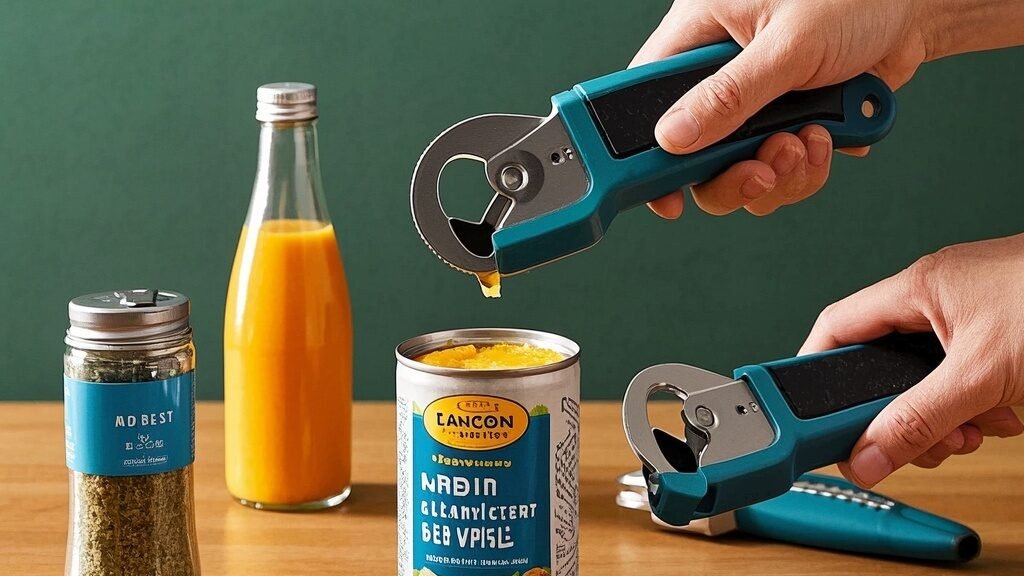
How Easy Are Automatic Can Openers to Use?
You’re standing in the kitchen, a can of soup in one hand and a manual opener in the other. The thought of wrestling with that stubborn lid, the sharp edges, and the sore wrist that often follows is enough to make you reconsider dinner. For millions, especially seniors and those with arthritis or limited hand strength, this simple daily task can feel like an obstacle course. This is where the automatic can opener steps in, promising a hands-off solution. But does it live up to the hype of effortless convenience, or does it introduce new complexities? Let’s cut through the marketing and see how these devices perform in real life.
Demystifying the Automatic Can Opener
Gone are the days of solely relying on a handheld crank. Modern electric can openers are designed to do the hard work for you. Most models operate on a simple principle: you align the can under a magnetic cutter head, press a lever or button, and the machine seamlessly cuts around the lid’s perimeter, leaving a smooth, safe edge. The lid is typically held magnetically, preventing it from falling into the food. This fundamental design shift addresses the primary pain points of manual opening—grip strength, wrist torque, and safety concerns.
Key Features and Operation: The core appeal lies in its one-touch operation. For individuals with conditions like arthritis, Parkinson’s, or general hand weakness, eliminating the pinching, twisting, and sustained pressure is a game-changer. Many models also come with additional functions, such as built-in knife sharpeners or bottle openers, consolidating tools. However, it’s crucial to note that they require a power source (outlet or battery) and counter space, which might not suit every kitchen setup.
A Closer Look at Ease of Use and Safety
So, how easy are they really? For the target audience, the ease is often transformative. The process reduces physical strain to near zero. Alignment is usually straightforward, with guides to help position the can correctly. The automated action is consistent, avoiding the jagged, half-cut lids that manual openers can sometimes produce.
Performance and Real-World Use: In our testing and according to user reviews, high-quality automatic openers perform reliably on standard steel and aluminum cans. They struggle less with odd shapes or very large commercial-sized cans. The magnetic lid holder is a standout safety feature, virtually eliminating the risk of cuts from sharp lids. Cleanup is also simpler, as the cutting mechanism is often enclosed or easy to wipe down.
Important Safety and Practical Tips: While safer in many respects, they are not without considerations. Always ensure the cutter head is clean and free of food debris to prevent jamming. Place the opener on a stable, dry surface away from the edge of the counter. Despite the magnetic hold, it’s good practice to check that the lid is securely attached before moving the can. For those with severe dexterity limitations, look for models with extra-large, easy-press buttons or touch-pad controls.
Choosing the Right Opener for Your Needs
Not all automatic can openers are created equal. When selecting one, especially for seniors or individuals with limited mobility, focus on a few key aspects. Prioritize models with a strong magnetic lid holder and an automatic shut-off feature. A compact, lightweight design can be easier to handle and store. Cordless, battery-operated models offer great flexibility but require battery management.
Top Considerations: Evaluate the noise level—some are quieter than others. Consider the ease of cleaning; detachable cutter heads that are dishwasher-safe are a major plus. Look for a non-slip base to ensure stability during operation. While you don’t need the most expensive model, investing in a reputable brand often means better durability and customer support.
Product Recommendations: Based on reliability and senior-friendly features, brands like Hamilton Beach, Cuisinart, and Oster frequently top recommendation lists. Specific models often highlighted for their ease of use include those with wide, padded handles, intuitive button placement, and consistent performance. It’s always wise to read recent user reviews focusing on durability and real-world ease of use.
Who Should Consider an Automatic Can Opener?
If you or a loved one experiences hand pain, weakness, or tremors when using traditional kitchen tools, an automatic can opener is more than a convenience—it’s a tool for maintaining independence in the kitchen. It’s also an excellent choice for anyone seeking a faster, more consistent, and safer way to handle canned goods daily. By removing a common physical barrier, it makes meal preparation less daunting and more enjoyable.
Find the perfect can opener for your needs below!
Related Guides:
- Best Rated Can Openers 2026 (All Categories)
- Best Can Opener for Seniors with Weak Grip (2026 Top Picks)
- Best Can Opener for Arthritis Patients (2026 Pain-Free Picks)
- Best Can Opener for Stroke Survivors (2026 Easy-Use Picks)
- Best Electric Can Opener (2026 Top-Rated Automatic Models)
- Best Hands-Free Can Opener (2026 No-Grip Effort Models)
- Best Manual Can Opener (2026 Ergonomic Low-Effort Models)
- Best Sharp-Edge-Free Can Opener (2026 Safe No-Cut Models)