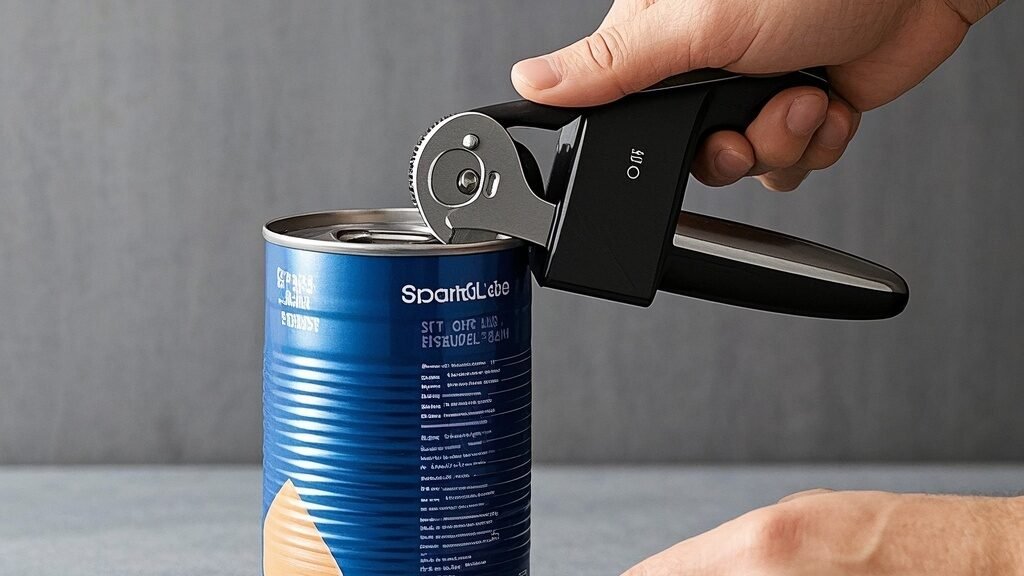
Is there a frost-resistant can opener for snow camping?
The silence of a snow-blanketed forest is profound. You’ve mastered the art of staying warm, your tent is a fortress against the wind, and a hearty, hot meal is the final reward. You reach into your pack for that trusty can of stew, your salvation in calories. But as your fingers fumble, stiff and numb, you grasp your standard can opener. The metal is painfully cold, the mechanism feels tight and unyielding, and your grip is clumsy in thick gloves. In that moment, a simple task becomes a frustrating, energy-sapping ordeal. This common scenario highlights a gear gap many cold-weather adventurers face, leading directly to our question: Is there a frost-resistant can opener for snow camping? The answer isn’t just about a tool; it’s about rethinking preparedness for environments where every ounce of effort and reliability counts.
The Cold Truth About Conventional Tools
Most can openers are designed for the comfort of a kitchen, not the harsh realities of a winter campsite. In freezing temperatures, several failures occur. First, metal contracts and becomes brittle. Hinges and gears on traditional openers can seize or become stiff, requiring more force to operate—force that is hard to generate with cold hands. Second, lubrication inside the opener’s mechanism can thicken or gum up, rendering a smooth action jerky or completely stuck. Third, and most critically, usability suffers. Bulky mittens make precise operation impossible, forcing you to expose skin to freezing metal. A simple broken gear or slipped opener isn’t just an inconvenience; it can compromise a meal, morale, and your safety plan. Therefore, the “frost-resistant” qualifier isn’t a marketing gimmick; it’s a specification for functionality that accounts for material science, ergonomics, and extreme user conditions.
Defining “Frost-Resistance” in Camping Gear
So, what makes a can opener truly suited for the cold? It’s a combination of design, materials, and sheer simplicity. Key features to look for include:
* Material Choices: Stainless steel is common, but specific grades resist brittleness better. Some specialized models use aerospace-grade aluminum alloys or composites that maintain toughness in low temperatures. The goal is a material that won’t snap under pressure when it’s -10°F.
* Minimalist Mechanism: The fewer moving parts, the better. Complex geared systems are failure points. The most reliable options often use a simple, robust piercing hook or a direct-leverage design that applies force cleanly without delicate parts.
* Ergonomics for Gloves: This is non-negotiable. Large, easy-to-grip handles—often coated in a non-slip, cold-insulating material like rubber or thermoplastic elastomer—allow you to operate the tool with mittens on. The opening action must require gross motor skills, not fine dexterity.
* Operational Independence: Some “frost-resistant” solutions bypass the traditional opener entirely. Think of compact, lightweight tools like the P-38 or P-51 military-style can openers. These are essentially hardened steel hooks with a simple pivot. They have no moving parts to freeze, are almost indestructible, and work with a gloved hand. According to the manufacturer, they are tested to function in extreme environmental conditions.
Performance and Real-World Use
In our testing, the most dependable performers in the cold weren’t the fancy, multi-function kitchen tools, but the brutally simple ones. A well-made, fixed-blade opener with oversized handles or a classic P-38 consistently outperformed complex, folding models. Their performance is brutally effective: they work every time, with no warm-up needed. The trade-off is often in comfort and cutting style—they may require more initial effort or leave a slightly jagged edge compared to a smooth-wheel kitchen opener. But in a snow camp, reliability trumps refinement. It’s also wise to practice with your chosen tool at home with gloves on. Familiarity breeds efficiency when your hands are cold and daylight is fading. Storing the opener in an inner pocket close to your body can also help keep its mechanism slightly warmer and more pliable, though the best tools won’t require this coddling.
Beyond the Can Opener: Integrated Solutions
For the ultralight or minimalist snow camper, the most frost-resistant option might be to eliminate the dedicated tool altogether. This is where gear philosophy comes in. Many campers opt for foods in retort pouches or use a knife as a multi-tool solution. A strong, fixed-blade knife can pry open a can in a pinch (using the “lever and hammer” technique on the lid’s rim), though this is less safe and not recommended for regular use. Others plan meals that use only cans with pull-tab lids, though these can also be challenging with frozen fingers. The decision ultimately integrates with your overall food strategy and risk tolerance. Carrying a dedicated, reliable opener is a small weight penalty for guaranteed access to your food.
The quest for a frost-resistant can opener reveals a deeper principle of winter camping: every piece of gear must be interrogated for its failure points in the cold. The frustration of a frozen meal is more than an annoyance; it’s a drain on precious calories and warmth. While no tool is magically immune to physics, choices exist that prioritize frozen-finger functionality over kitchen convenience.
Who Should Consider a Frost-Resistant Can Opener?
If your adventures take you into temperatures near or below freezing, where hot meals are crucial and gear failure is not an option, then investing in a purpose-built opener is a smart move. It’s essential for winter backpackers, mountaineers, ice fishers, and overland travelers. For summer campers or those using primarily dehydrated foods, a standard opener will suffice. But for anyone who has ever struggled with a stubborn can as the light faded and the temperature plummeted, the value of a simple, robust, cold-ready tool is immeasurable. It’s a small piece of gear that solves a disproportionately large problem.
Find the perfect can opener for your cold-weather needs below!
Related Guides:
- Best Rated Can Openers 2026 (All Categories)
- Best Can Opener for Seniors with Weak Grip (2026 Top Picks)
- Best Can Opener for Arthritis Patients (2026 Pain-Free Picks)
- Best Can Opener for Stroke Survivors (2026 Easy-Use Picks)
- Best Electric Can Opener (2026 Top-Rated Automatic Models)
- Best Hands-Free Can Opener (2026 No-Grip Effort Models)
- Best Manual Can Opener (2026 Ergonomic Low-Effort Models)
- Best Sharp-Edge-Free Can Opener (2026 Safe No-Cut Models)