What Is Safest Can Opener for Elderly Hands?
Opening a can should be a simple task, but for many seniors, it can feel like a daunting challenge. Arthritic hands, weakened grip strength, or tremors can turn a basic kitchen tool into a source of frustration and even danger. The familiar struggle with a slippery, hard-to-turn manual opener is more than an inconvenience; it can chip away at the confidence and independence that comes with preparing one’s own meals. Finding the safest can opener for elderly hands isn’t just about convenience—it’s about preserving dignity and safety in the kitchen. The right tool can transform a risky chore back into an easy, autonomous act.
Key Safety Features to Look For
When shopping for a senior-friendly can opener, safety is the paramount concern. The goal is to minimize sharp edges, reduce physical strain, and prevent accidents. A traditional opener that leaves a jagged, razor-sharp lid is a significant hazard, especially for those with unsteady hands or diminished vision.
Safety-Cut Mechanisms and Smooth Edges: The most critical feature is a design that leaves a smooth, safe edge on both the can and the detached lid. Look for openers that cut from the side or under the rim, leaving no sharp metal behind. This eliminates the risk of nasty cuts when handling or disposing of the lid and the can itself.
Stability and Secure Grip: A can opener that slips or wobbles is an accident waiting to happen. Models with strong magnetic lids that hold the cut lid securely are excellent, as they prevent it from falling back into the food. Non-slip bases or large, easy-to-hold handles that provide stability during the turning process are also essential for safe, controlled operation.
Ease of Use for Limited Mobility and Arthritis
For seniors with arthritis, weak hands, or limited dexterity, the physical effort required to operate a can opener is the biggest barrier. The ideal opener requires minimal grip strength, leverage, and repetitive motion.
Ergonomic Design and Effortless Operation: Prioritize openers with large, soft-grip handles that distribute pressure and are easy to grasp. Electric can openers are often the top choice here, as they require only the push of a button. For manual options, look for designs with extra-long or oversized turning knobs that provide greater leverage, making each turn easier on the joints.
Automatic Functions and One-Handed Use: Many modern openers offer “hands-free” or automatic operation. You simply clamp the opener onto the can, and it does the work, stopping automatically when the cut is complete. This is invaluable for users with the use of only one hand or those with significant strength limitations. It allows them to open cans independently without strain or struggle.
Practical Tips for Safe Can Opening at Any Age
Even with the best tools, good practices enhance safety. A few simple habits can make the kitchen a much safer place for elderly users and everyone else.
Setup and Posture Matter: Always open cans on a stable, clean, and dry countertop. Ensure the opener is securely attached before starting. Good lighting is crucial to see the alignment clearly. Encourage a comfortable stance to maintain balance and control throughout the process.
Maintenance and Disposal: A dull or dirty opener is harder to use and less safe. Regularly clean the cutting wheel and gears according to the manufacturer’s instructions to ensure smooth operation. For disposal, immediately place the smooth, magnetically-held lid into the trash or recycling bin. If the lid isn’t magnetized, use a towel to grasp it safely. Never leave a detached sharp lid loose on the counter or in the sink.
Top Recommended Types of Can Openers for Seniors
Based on safety and ease-of-use criteria, a few styles stand out as particularly suitable for elderly users.
1. Automatic Electric Can Openers: These are frequently the safest and easiest can opener for seniors. They are hands-free, require almost zero grip strength, and most feature side-cutting mechanisms that leave perfectly smooth edges. The main considerations are that they require counter space and an electrical outlet.
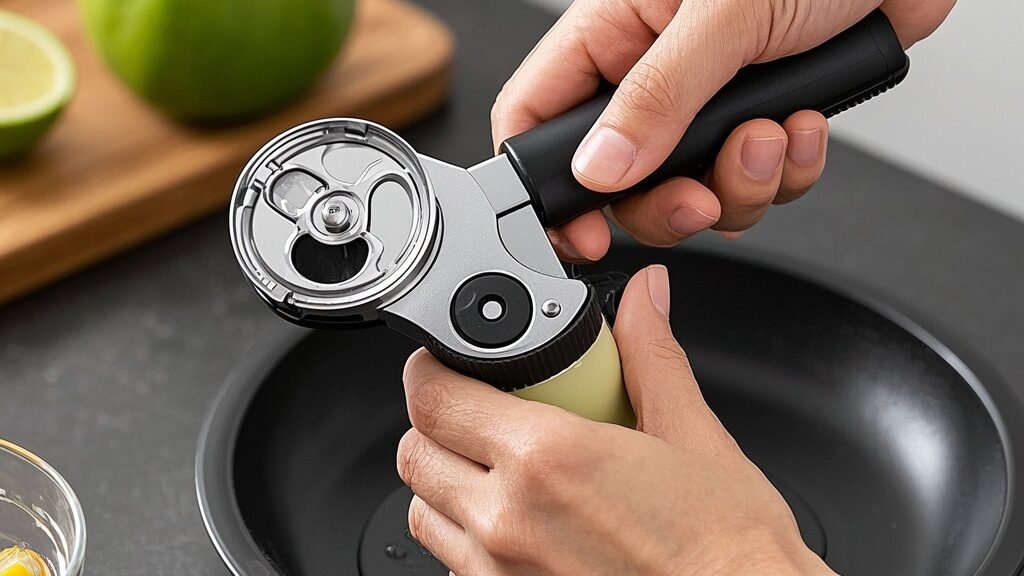
2. Side-Cutting Manual Openers: These openers pierce and cut from the side of the can’s rim, leaving no sharp edges on the lid or the can. They often have large, ergonomic turning knobs. They provide excellent safety without needing electricity, though they do require some manual turning effort.
3. Under-Cabinet Electric Openers: These mount underneath a kitchen cabinet, saving counter space. They offer the same effortless, one-touch operation as countertop electric models and are a great space-saving solution for smaller kitchens.
4. Jar Openers with Can Opener Functions: Some multi-function tools designed for weak hands include a built-in can opener. These can be a good compact option, though their primary function is often opening jars, so the can-opening feature may not be as robust as a dedicated device.
Who Should Consider a Safety Can Opener?
If you or a loved one experiences hand pain, stiffness, weakness, or tremors, or simply values maximum safety and effortless convenience in the kitchen, investing in a senior-friendly can opener is a wise decision. It’s a small change that can have a profound impact, restoring independence and eliminating a common source of kitchen anxiety. The right opener turns a daily challenge into a simple, secure task. Find the perfect can opener for your needs and reclaim your kitchen confidence today!
Related Guides:
- Best Rated Can Openers 2026 (All Categories)
- Best Can Opener for Seniors with Weak Grip (2026 Top Picks)
- Best Can Opener for Arthritis Patients (2026 Pain-Free Picks)
- Best Can Opener for Stroke Survivors (2026 Easy-Use Picks)
- Best Electric Can Opener (2026 Top-Rated Automatic Models)
- Best Hands-Free Can Opener (2026 No-Grip Effort Models)
- Best Manual Can Opener (2026 Ergonomic Low-Effort Models)
- Best Sharp-Edge-Free Can Opener (2026 Safe No-Cut Models)