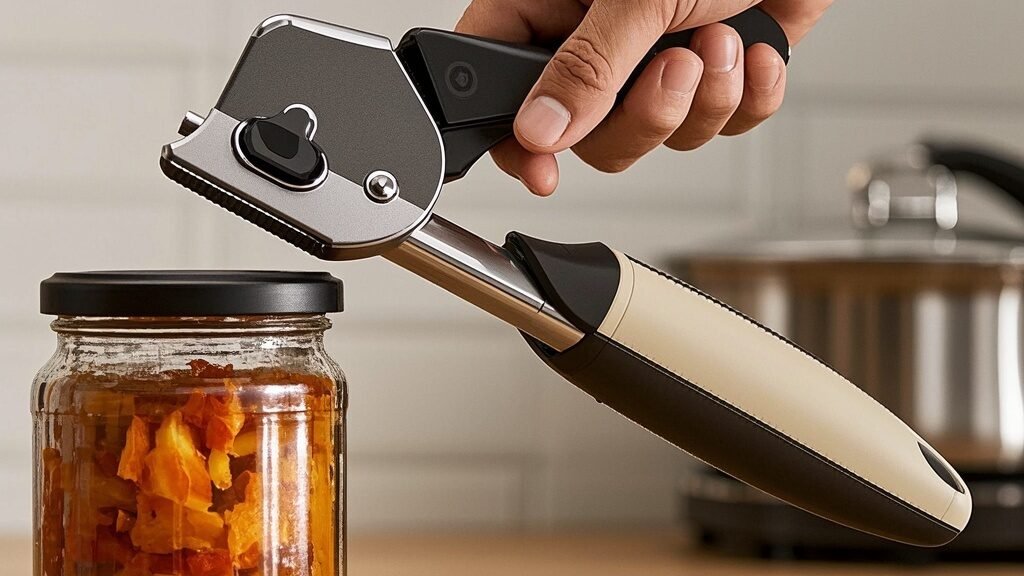
Can Safety Can Openers Improve Kitchen Independence?
Opening a simple can of soup shouldn’t feel like a daunting task. Yet, for many older adults or individuals with arthritis, weak grip strength, or limited hand mobility, the familiar struggle with a manual can opener can be a daily source of frustration and even pain. That metallic grinding, the slippery handle, the sharp lid left behind—it’s more than an inconvenience; it’s a barrier to preparing a meal independently. This is where the specialized design of a safety can opener changes the narrative entirely. By focusing on pain-free operation and intuitive use, these tools aren’t just gadgets; they are keys to maintaining dignity and self-sufficiency in the kitchen.
Understanding the Challenges: Why Standard Openers Fall Short
Traditional manual can openers require a significant amount of grip strength, wrist rotation, and downward pressure. For someone with arthritis in their hands or a condition like Parkinson’s, these actions can range from uncomfortable to nearly impossible. The handles are often thin and hard, digging into tender joints. Furthermore, the process leaves a lethally sharp lid edge exposed, posing a serious cut risk during removal or disposal. Electric openers can be an alternative, but their buttons, weight, and need for precise alignment can present their own hurdles. A true can opener for seniors or those with limited mobility must address these specific physical challenges head-on.
Key Features of a Senior-Friendly Safety Can Opener
When shopping, look for these essential design elements that prioritize safety and ease of use.
Ergonomic and Oversized Handles: This is non-negotiable. Large, soft-grip handles distribute pressure across the palm instead of concentrating it on fingers and joints. They should be easy to squeeze with minimal force.
Smooth, Effortless Operation: The best models feature large, easy-turn knobs or levers that require very little wrist action. Gearing systems should do the hard work, allowing the user to guide the opener rather than muscle it around the can.
Safety-First Lid Removal: The hallmark of a true safety opener is how it handles the lid. Look for designs that cut the lid from the side, leaving a smooth, safe edge on the can itself, and magnetically hold the detached lid. This eliminates any contact with sharp metal.
Stable and Secure Mounting: Many assistive openers are designed to clamp firmly onto the can’s rim or sit stably on a countertop. This provides crucial stability, reducing the need for the user to hold both the can and the opener steady simultaneously.
Practical Tips for Choosing and Using Your Opener
Finding the right tool is the first step; using it effectively ensures long-term success and safety.
Test the Grip (If Possible): Before purchasing, if shopping in person, simulate the squeezing motion. Does it feel comfortable? Is the mechanism smooth? For online shopping, read reviews specifically mentioning ease of use for arthritic hands.
Prioritize Simple Controls: Choose models with one or two obvious controls. Complicated dials or small switches can be difficult to manipulate. Some excellent openers operate with a single, large lever.
Consider a Wall-Mount: For individuals with very limited strength or the use of only one hand, a permanently mounted, lever-action opener can be a game-changer. It fixes the can in place, allowing all effort to be directed into a simple downward pull.
Maintenance is Key: Keep the cutting wheel clean and free of food debris. A dull or gummed-up wheel requires more force to operate. Periodically check that all parts are secure and functioning smoothly.
Safety Considerations Beyond the Opener
While a good opener mitigates most risks, a holistic approach to kitchen safety is vital.
Always ensure the work surface is dry and stable to prevent the can or opener from slipping. After opening, use the magnetized lid or a utensil to dispose of the lid directly into the recycling or trash—never try to pick it up with your fingers. For electric models, keep cords tidy and away from the edge of the counter to avoid pulling the unit down. It’s also wise to have a family member or caregiver demonstrate the opener’s use initially, ensuring the user is confident and comfortable with the process.
Who Should Consider a Safety Can Opener?
If the act of opening cans has become a painful, anxiety-inducing, or impossible part of your kitchen routine, it’s time for a change. A safety can opener is an essential tool for seniors aiming to age in place, individuals managing arthritis, carpal tunnel, or reduced hand strength, and anyone who values independence in the kitchen. It transforms a mundane task from a barrier back into a simple step toward a home-cooked meal. The right tool doesn’t just open cans; it opens up possibilities. Find the perfect can opener for your needs below!
Related Guides:
- Best Rated Can Openers 2026 (All Categories)
- Best Can Opener for Seniors with Weak Grip (2026 Top Picks)
- Best Can Opener for Arthritis Patients (2026 Pain-Free Picks)
- Best Can Opener for Stroke Survivors (2026 Easy-Use Picks)
- Best Electric Can Opener (2026 Top-Rated Automatic Models)
- Best Hands-Free Can Opener (2026 No-Grip Effort Models)
- Best Manual Can Opener (2026 Ergonomic Low-Effort Models)
- Best Sharp-Edge-Free Can Opener (2026 Safe No-Cut Models)