Can Weak Hands Use Safety Can Openers?
Opening a simple can of soup shouldn’t feel like a test of strength or a painful chore. For millions of seniors and individuals with arthritis, weak grip strength, or limited hand mobility, that’s exactly what it becomes. The familiar struggle with a traditional manual opener—the sharp edges, the slippery handles, the twisting motion—can turn a basic kitchen task into a source of frustration and even risk. This is where the concept of a safety can opener shifts from a niche product to an essential tool for maintaining independence and confidence in the kitchen.
Understanding the Challenges: Why Traditional Openers Fail
To appreciate the design of a safety can opener for weak hands, it’s crucial to understand where standard models fall short. Traditional manual openers require significant grip strength to clamp onto the can’s rim and sustained rotational force to turn the key. This combination of pinching and twisting is particularly difficult for those with arthritis, as it stresses the very joints—fingers, thumbs, and wrists—that are most affected.
Key Pain Points and Risks: The act of prying off a sharp, jagged lid poses a serious cut hazard. Furthermore, the required dexterity and force can lead to dropped cans, spills, and fatigue. For someone with tremors or limited fine motor control, these tasks become daunting, potentially leading to reliance on others for a fundamental act of self-care.
Features That Make a Difference: What to Look For
Modern can openers for seniors and individuals with limited mobility are engineered to eliminate these pain points. They don’t just open cans; they do so safely, effortlessly, and pain-free. When evaluating options, prioritize these key features designed for accessibility.
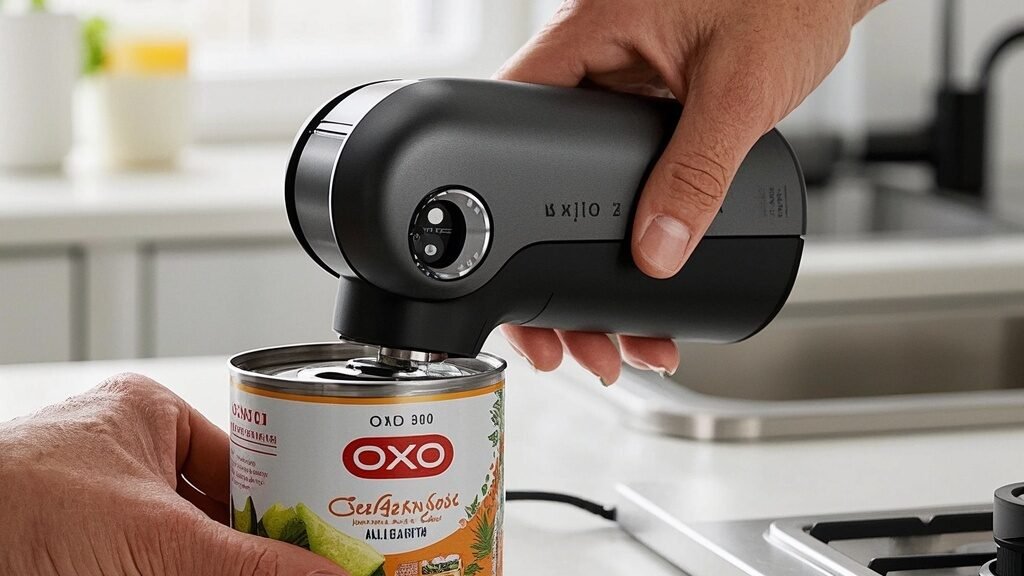
Ergonomic and Power-Assisted Operation: Look for large, soft-grip handles that distribute pressure across the palm, not just the fingers. Electric or battery-powered models are often the best choice, as they require only a push of a button to do the hard work. Some advanced manual models use innovative gear systems that multiply your input force, making turning remarkably easy.
Safety-First Cutting Mechanisms: The hallmark of a true safety opener is how it handles the lid. The best models cut from the side, leaving a smooth, safe edge on both the can and the removed lid. Others magnetically hold the lid after cutting, so you never have to touch it. This eliminates the risk of cuts from sharp metal.
Top Considerations and Practical Tips for Choosing
Selecting the right tool involves more than just features; it’s about matching the product to the individual’s specific abilities and kitchen setup. A thoughtful approach ensures the opener will be used consistently and safely.
Assessing Individual Needs: Consider the user’s dominant hand strength, range of motion, and whether they can apply downward pressure. For very weak grip, a tall, stable electric model that requires only guiding is ideal. For those with some strength but pain, a large-levered manual opener with side-cutting action can be perfect. Always check the weight of the device itself; it should be light enough to handle easily.
Setup and Daily Use Tips: Place the opener on a stable, non-slip surface. For electric models, ensure the cord is secured to prevent tripping. Practice with the new opener on an empty can first to build confidence. Establish a routine where opened cans are immediately emptied and the smooth lid is disposed of safely. This maintains a clutter-free, hazard-free workspace.
Safety Beyond the Opener: Creating a Secure Kitchen
While a good opener is central, overall kitchen safety is paramount. Ensure countertops are clear to allow for easy maneuvering. Use non-slip mats under cutting boards and appliances. Consider keeping a dedicated, easy-to-reach bin for recycling cans and lids to avoid accidental contact with discarded sharp edges. Pairing a safety can opener with other adaptive tools like jar openers and easy-grip utensils creates a comprehensively accessible cooking environment.
Who Should Consider a Safety Can Opener?
If you or a loved one hesitates before tackling a canned good, experiences hand or wrist pain while cooking, or has concerns about cuts and spills, a safety can opener is a worthwhile investment. It’s more than a convenience; it’s a tool that reclaims independence, reduces risk, and makes daily nutrition simpler and safer. By focusing on ergonomic design and safe lid removal, these openers empower individuals to continue preparing their own meals with confidence and comfort.
Find the perfect can opener for your needs below and take the first step toward a safer, more independent kitchen today!
Related Guides:
- Best Rated Can Openers 2026 (All Categories)
- Best Can Opener for Seniors with Weak Grip (2026 Top Picks)
- Best Can Opener for Arthritis Patients (2026 Pain-Free Picks)
- Best Can Opener for Stroke Survivors (2026 Easy-Use Picks)
- Best Electric Can Opener (2026 Top-Rated Automatic Models)
- Best Hands-Free Can Opener (2026 No-Grip Effort Models)
- Best Manual Can Opener (2026 Ergonomic Low-Effort Models)
- Best Sharp-Edge-Free Can Opener (2026 Safe No-Cut Models)