What Can Opener Is Best After Hand Surgery?
You’ve finally unboxed the stack of get-well cards, mastered the art of one-handed typing, and navigated the labyrinth of pillows to find a comfortable sleeping position. Recovery is underway. But then, a mundane yet critical challenge emerges: making a simple meal. You stare at a can of soup, that humble beacon of easy nutrition, and it stares back, a sealed metal fortress. Your usual twist-and-puncture routine is now a physical impossibility. This isn’t just about opening a can; it’s about reclaiming a sliver of independence when your grip is weak, your wrist is immobilized, or pain limits your motion. Finding the best can opener after hand surgery becomes a crucial, non-negotiable quest for self-sufficiency during recovery.
The Post-Surgery Kitchen: Redefining “Easy”
Forget everything you know about standard can openers. The traditional manual model, requiring a firm grip, sustained twisting force, and precise downward pressure, is now your adversary. Electric openers with tiny buttons or complex latches aren’t much better. Post-hand surgery, your needs are hyper-specific. You require tools that operate on the principle of maximum output for minimal input. This means prioritizing mechanisms that use lever action, push-button automation, or ergonomic designs that transfer force from vulnerable fingers and wrists to larger muscle groups like your forearm or even your palm. Stability is also key—a can opener that securely clamps itself to the can does half the work for you. The goal isn’t just to open the can; it’s to do so without strain, without frustration, and without jeopardizing your healing process.
Key Features to Seek (And What to Avoid)
When evaluating options, focus on these non-negotiable features. First, lever-style or rocker openers are often the top recommendation from occupational therapists. These tools use a simple punching mechanism; you position them on the can’s rim and push down on a large lever, using your body weight or arm strength instead of a pinching grip. They leave a smooth edge, which is a significant safety bonus. Second, consider power-assisted or fully electric openers with large, easy-to-press buttons or touch pads. Look for models where you simply place the can on a platform and press one button—the machine does the aligning, magnetically lifts the lid, and stops automatically. Third, ergonomic grip is paramount. Wide, soft-grip handles that allow you to use your whole palm to generate force are far superior to thin, knurled metal handles.
What should you avoid? Steer clear of anything with small dials, tight spring-loaded handles, or openers that require you to hold a can steady while maneuvering a separate cutter. Also, be wary of cheaply made electric models with flimsy magnets or weak motors that might jam, requiring forceful intervention.
Top Contender Styles for Your Consideration
Let’s break down the leading styles that fit the bill:
1. Smooth-Edge Lever Openers: Brands like OXO Good Grips or EZ-Duz-It offer excellent models. They require no twisting of the wrist. You clamp them onto the can (often with a simple push-action clamp) and rock the large lever back and forth. The cutting happens via a rolling wheel that travels under the rim, leaving no sharp edges. The leverage required is minimal.
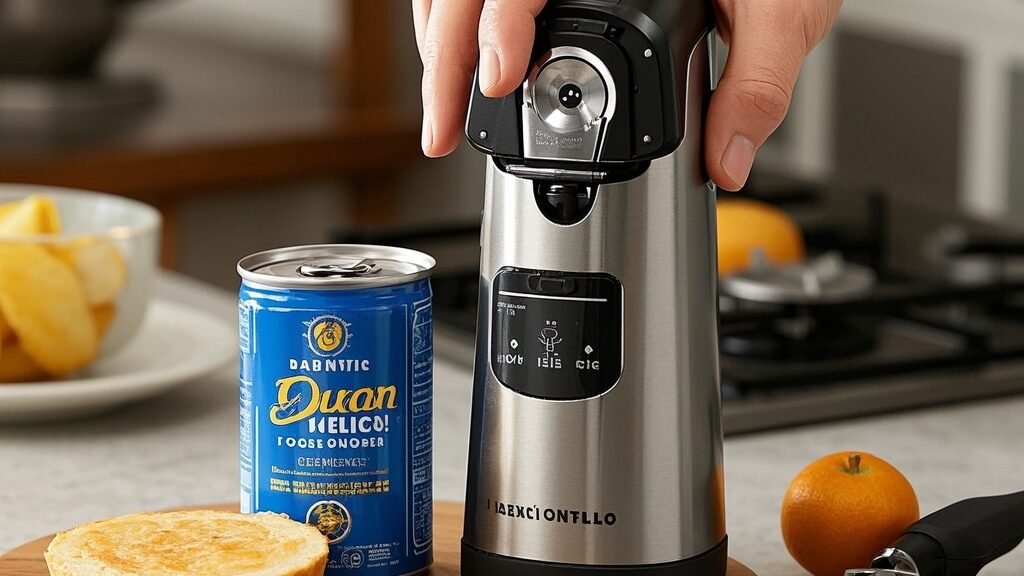
2. One-Touch Electric Openers: The Hamilton Beach Sure-Touch is a classic in this category. You place the can under the head, and a single, large button activates the process. In our testing, its hands-free operation and powerful magnet that removes the lid are huge advantages when you have limited dexterity in one hand.
3. Side-Cutting / Battery-Operated Openers: These are a niche but useful option. They attach to the side of the can and use a battery-powered mechanism to drive the cutter around the rim. They are typically very lightweight and require almost zero grip strength to operate, though their stability can vary by model.
Balancing Practicality with Your Recovery Timeline
Your choice may also depend on your recovery phase. In the initial weeks, when strength and mobility are most limited, a fully automatic, one-button electric opener is likely the safest and least frustrating investment. It removes all variables. As you gain strength and enter occupational therapy, a smooth-edge lever opener can become a fantastic tool for practicing controlled motion and gentle force application—it’s therapeutic and practical. Think about your long-term needs, too. Many of these ergonomic openers are superior products you’ll continue to use long after recovery, promoting joint health. According to manufacturers, devices designed for arthritis sufferers often share the same core benefits needed for post-surgical recovery: high leverage, soft grips, and easy operation.
Regaining independence after surgery happens in small victories. Successfully preparing a meal without assistance is one of the most empowering. By choosing a tool designed for your temporary—but very real—physical limitations, you remove a point of daily friction and focus your energy on healing. The right can opener is more than a kitchen gadget; it’s a tool for dignity and progress during recovery.
Who Should Consider a Post-Surgery Can Opener?
Anyone with reduced grip strength, limited wrist mobility, or pain in their hands or arms—whether from surgery, arthritis, neuropathy, or a temporary injury—should absolutely rethink their kitchen tools. Investing in an adaptive can opener isn’t an admission of limitation; it’s a smart strategy for maintaining autonomy. Don’t let a simple can stand between you and a warm, hassle-free meal.
Find the perfect can opener for your recovery needs below!
Related Guides:
- Best Rated Can Openers 2026 (All Categories)
- Best Can Opener for Seniors with Weak Grip (2026 Top Picks)
- Best Can Opener for Arthritis Patients (2026 Pain-Free Picks)
- Best Can Opener for Stroke Survivors (2026 Easy-Use Picks)
- Best Electric Can Opener (2026 Top-Rated Automatic Models)
- Best Hands-Free Can Opener (2026 No-Grip Effort Models)
- Best Manual Can Opener (2026 Ergonomic Low-Effort Models)
- Best Sharp-Edge-Free Can Opener (2026 Safe No-Cut Models)