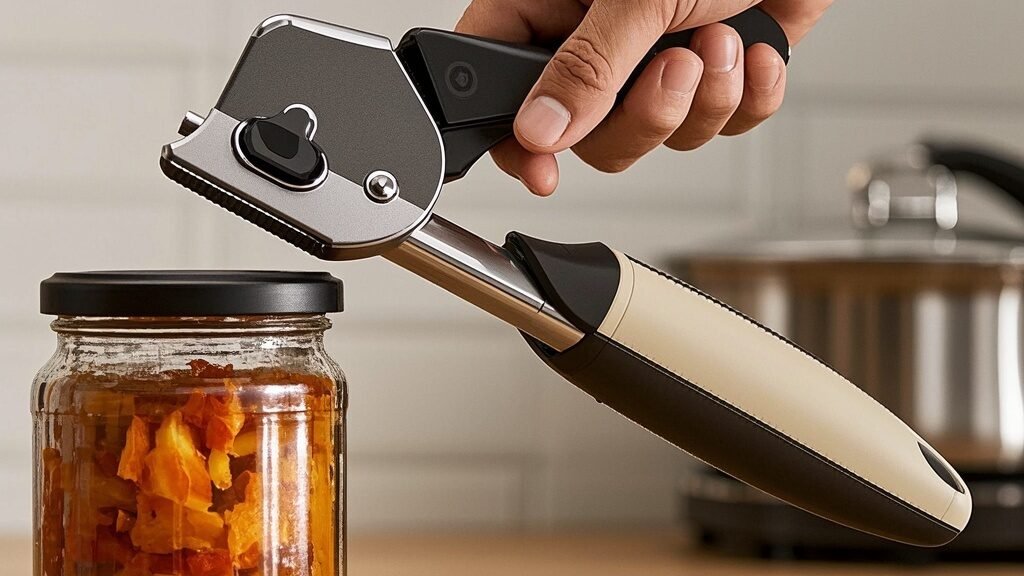
What is the difference between a can opener and a tin opener?
Picture this: you’ve just moved into your first apartment, standing in a kitchen aisle staring at a wall of kitchen gadgets. Your hand hovers between two nearly identical tools, both designed to open sealed metal containers. One is labeled “can opener,” the other “tin opener.” A moment of genuine confusion sets in. Is there a real, functional difference, or is this just a trick of language? This tiny lexical puzzle is a perfect gateway into the fascinating world of linguistic evolution, regional dialects, and how everyday objects become cultural markers. At its heart, the difference between a can opener and a tin opener is primarily one of geography, not mechanics.
A Tale of Two Terms: It’s All About Location
Let’s crack this open. In practical function, there is no mechanical difference between the device an American calls a “can opener” and what a Brit calls a “tin opener.” Both refer to a tool—whether manual, electric, or attached to a multi-tool—that cuts through the lid of a container preserving food. The divergence is purely linguistic. In the United States and Canada, the term “can” is king for describing these metal receptacles. Thus, the tool is logically a “can opener.” Across the Atlantic, in the United Kingdom, Ireland, Australia, and other Commonwealth nations, “tin” is the preferred word for the same container (think “tin of beans” or “tin of tuna”). Consequently, the tool is a “tin opener.” This is a classic example of a dialectal variation, where two regions speaking the same language develop different words for the same object. It’s the culinary equivalent of “faucet” versus “tap” or “trunk” versus “boot.”
The Historical Can: A Story of Preservation and Innovation
To understand why two terms even exist, a quick look at history helps. The process of sealing food in airtight metal containers for preservation was pioneered in the early 19th century. Initially, these containers were made of wrought iron and coated with tin to prevent rust—hence the term “tin can” or simply “tin.” The earliest openers were crude, often just knives or chisels, and the cans themselves were so thick they sometimes came with instructions to “cut around the top with a hammer and chisel.” As the technology evolved, specialized tools emerged. In America, the term “can” gradually became the standalone noun for the container, while in Britain, the material “tin” stuck as the synecdoche for the whole object. The tools followed suit, branding themselves according to the local vernacular. So, when you’re comparing a can opener vs. tin opener, you’re really uncovering a fossilized linguistic layer from the dawn of food preservation.
Modern Designs and User Experience
While the core names differ by region, the evolution of the tool itself has been universal, focusing on safety, ease of use, and precision. Today, whether you shop for a can opener in Chicago or a tin opener in London, you’ll encounter the same categories:
* Manual Side-Cut Openers: The classic design that pierces and cuts around the perimeter of the lid, leaving a relatively smooth edge.
* Smooth-Edge or Safety Openers: These peel the lid away from the can by severing it just beneath the rim, leaving no sharp edges on either the lid or the can. They are hugely popular for their safety and clean operation.
* Electric Openers: These offer hands-free, effortless operation with the push of a button, a favorite for those with limited hand strength.
* Multi-Tools and Camping Openers: The simple, compact, and often attachment-based designs, like the iconic P-38 military opener.
The choice here isn’t about terminology, but about your kitchen habits. Do you value speed and convenience, or is safety and easy cleanup your top priority? The best tool for you will depend on these factors, not on whether you use the word “can” or “tin.”
Who Should Consider a New Can/Tin Opener?
So, who needs to think about this humble tool? Honestly, almost every kitchen can benefit from reevaluating its can opener. If yours is struggling, rusting, leaving jagged edges, or requiring a Herculean effort to turn the knob, it’s time for an upgrade. Consider a smooth-edge model if you have children or are accident-prone. An electric model is a fantastic accessibility aid for those with arthritis or reduced grip strength. Avid campers or preppers should absolutely have a reliable, portable manual opener in their gear.
In the end, the difference between a can opener and a tin opener is a charming reminder of how language shapes our daily reality. It’s a distinction without a mechanical difference, a story of culture and history told through a simple kitchen drawer essential. No matter what you call it, its job remains the same: to grant you safe and easy access to your food. Perhaps the real question isn’t about the name, but about whether your current one is serving you well.
Find the perfect can opener for your needs below!
Related Guides:
- Best Rated Can Openers 2026 (All Categories)
- Best Can Opener for Seniors with Weak Grip (2026 Top Picks)
- Best Can Opener for Arthritis Patients (2026 Pain-Free Picks)
- Best Can Opener for Stroke Survivors (2026 Easy-Use Picks)
- Best Electric Can Opener (2026 Top-Rated Automatic Models)
- Best Hands-Free Can Opener (2026 No-Grip Effort Models)
- Best Manual Can Opener (2026 Ergonomic Low-Effort Models)
- Best Sharp-Edge-Free Can Opener (2026 Safe No-Cut Models)