What is the easiest can opener for seniors to use?
Imagine standing in your kitchen, a simple can of soup in hand. Your fingers, perhaps stiffened by arthritis or less steady than they once were, fumble with a traditional, bulky opener that requires a firm grip and a strong twist. What should be a quick task becomes a source of frustration, a small but daily reminder of physical limitations. For millions of older adults, this isn’t just a hypothetical scene—it’s a real obstacle to independence and ease in the kitchen. The quest for the easiest can opener for seniors to use isn’t about luxury; it’s about dignity, safety, and reclaiming the simple joy of preparing a meal without struggle. It hinges on a shift from manual force to intelligent, accessible design that accommodates changing abilities.
Core Challenges: Grip Strength, Dexterity, and Safety
Before evaluating specific openers, it’s crucial to understand the common physical hurdles. Arthritis, reduced hand strength, tremors, or limited wrist mobility can make using a standard, side-cutting manual opener nearly impossible. These models require significant downward pressure, a tight pinch grip to turn the knob, and precise alignment—all potential pain points. Safety is another major concern. Slippery hands can lead to slips against sharp edges, and struggling with a stuck opener can cause strain or accidents. Therefore, the “easiest” opener directly addresses these issues: it should minimize the force needed, maximize stability, eliminate the need for a tight grip, and create a safe process from start to finish. The goal is an operation that feels secure and almost effortless.
Electric Can Openers: Hands-Free Ease
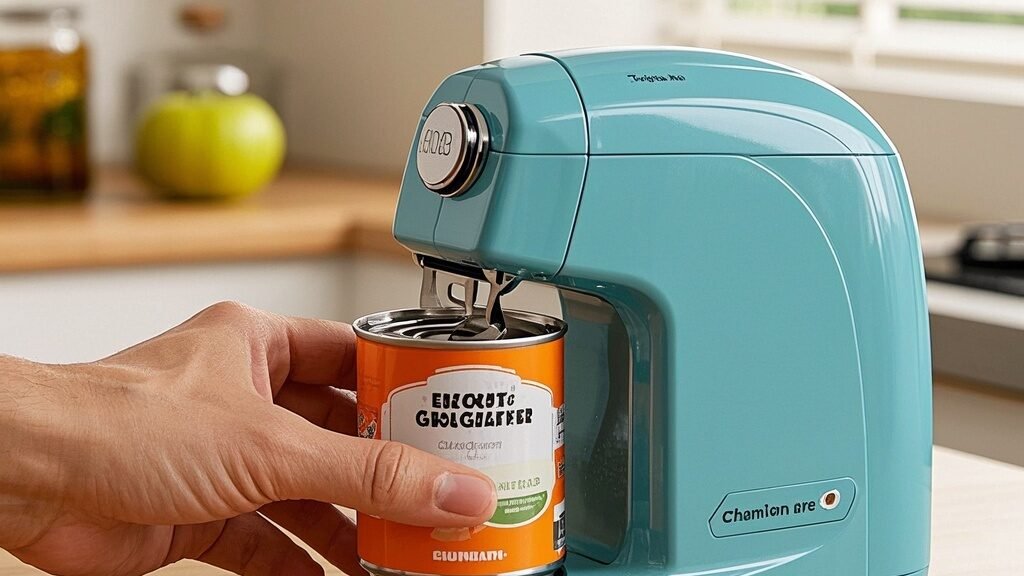
For sheer, push-button simplicity, a high-quality electric can opener is often the top contender. The primary advantage is hands-free operation. You simply place the opener’s magnet over the can’s lid, press a lever to lock it in place, and push a button. The machine does all the cutting and lifting for you, stopping automatically. This requires minimal grip—just enough to place the can—and zero twisting or cranking. The best models for seniors feature large, easy-to-press buttons, a powerful magnet that securely holds the lid (so no sharp edges are touched), and an easy-to-clean design. The main drawbacks are that they require counter space and an electrical outlet, and they must be kept clean to function smoothly. But for those with significant hand weakness or arthritis, this trade-off is usually well worth it.
Smooth-Edge Manual Openers: Safe and Low-Effort
If you prefer a non-electric tool, modern smooth-edge (or safety-edge) manual openers are a revolutionary alternative to the old-fashioned kind. Instead of cutting through the lid’s side, these openers roll the lid’s edge off from below, leaving a perfectly smooth rim on both the can and the lid. This eliminates sharp edges entirely, a huge safety benefit. In terms of ease, they typically feature large, ergonomic turning knobs that are easier to grasp and require less rotational force than traditional models. Brands like OXO Good Grips are renowned for incorporating soft, non-slip handles that are comfortable even for arthritic hands. While they do require some manual turning, the motion is smoother and the leverage is better. They are also compact, easy to clean, and don’t require batteries or power.
Alternative Designs: Wall-Mounted and Under-Cabinet Models
Beyond countertop electrics and handheld manuals, there’s a third category worth considering: stable, mounted openers. These include sturdy wall-mounted or under-cabinet manual openers. Their key advantage is exceptional stability. The opener is fixed to a surface, so you only need to place the can and turn the crank with one hand, using your body weight or the fixed base for leverage instead of your other hand to hold a slippery opener steady. This can be significantly easier for those with tremors or very weak grip in one hand. They are durable and always within reach. The installation step is a barrier, but once mounted, they provide a reliable, low-effort solution. Some high-end electric models also offer under-cabinet mounting options for a permanent, space-saving setup.
Finding the easiest can opener for seniors to use ultimately depends on the individual’s specific needs and kitchen setup. For maximum independence with minimal physical demand, a hands-free electric model is unbeatable. For those who want a safe, simple, and non-electric tool, a smooth-edge manual opener with ergonomic handles is an excellent choice. And for users who need extra stability, a securely mounted model can make the familiar cranking motion feel manageable again.
Who Should Consider an Electric Can Opener? Seniors with significant arthritis, very limited grip strength, or the desire for the absolute simplest “one-touch” operation. It’s also ideal for caregivers who want to set up a safe, easy kitchen environment.
Who Should Consider a Smooth-Edge Manual Opener? Those who have mild to moderate dexterity issues, prefer non-electric tools, and prioritize safety from sharp edges above all else. It’s perfect for maintaining kitchen independence with a bit of manageable effort.
Who Should Consider a Mounted Opener? Individuals who struggle with stabilizing a can and opener simultaneously but are still comfortable with a cranking motion. It’s a great solution for a dedicated cooking space.
Don’t let a simple can become a barrier. The right tool can restore confidence and ease in the kitchen. Find the perfect can opener for your needs below!
Related Guides:
- Best Rated Can Openers 2026 (All Categories)
- Best Can Opener for Seniors with Weak Grip (2026 Top Picks)
- Best Can Opener for Arthritis Patients (2026 Pain-Free Picks)
- Best Can Opener for Stroke Survivors (2026 Easy-Use Picks)
- Best Electric Can Opener (2026 Top-Rated Automatic Models)
- Best Hands-Free Can Opener (2026 No-Grip Effort Models)
- Best Manual Can Opener (2026 Ergonomic Low-Effort Models)
- Best Sharp-Edge-Free Can Opener (2026 Safe No-Cut Models)