What type of can opener is easiest for elderly people?
Imagine standing in your own kitchen, a simple can of soup in hand. Your fingers, perhaps stiffened by arthritis or less steady than they once were, fumble with a familiar handheld opener. The effort required to puncture the metal, the awkward twisting motion, the slippery grip—what should be a trivial task becomes a source of frustration and even a safety concern. For many seniors, maintaining independence in daily routines is paramount, and kitchen tools are a critical part of that equation. This is where choosing the right can opener transforms from a minor purchase into a significant quality-of-life decision. The easiest opener for elderly users isn’t about the fanciest technology; it’s about fundamentally rethinking force, grip, and stability to reduce physical demand.
The Critical Flaws of Traditional Handheld Openers
Let’s start by understanding why the classic manual opener often fails an aging user. These tools require a specific combination of actions: firm downward pressure to pierce the lid, a secure grip on often-small, slippery handles, and sustained rotational force from the wrist and forearm. For someone with weakened hand strength, arthritis, or conditions like Parkinson’s that cause tremors, each step presents a hurdle. The pressure can cause pain in finger joints. The twisting motion can strain wrists. A shaky grip might cause the opener to slip, potentially damaging the can’s rim or creating sharp edges. While these openers are inexpensive and ubiquitous, their design inherently demands a level of dexterity and strength that many seniors naturally lose over time. Therefore, the search for an easier alternative must prioritize eliminating these precise physical demands.
The Superior Solution: Electric Can Openers
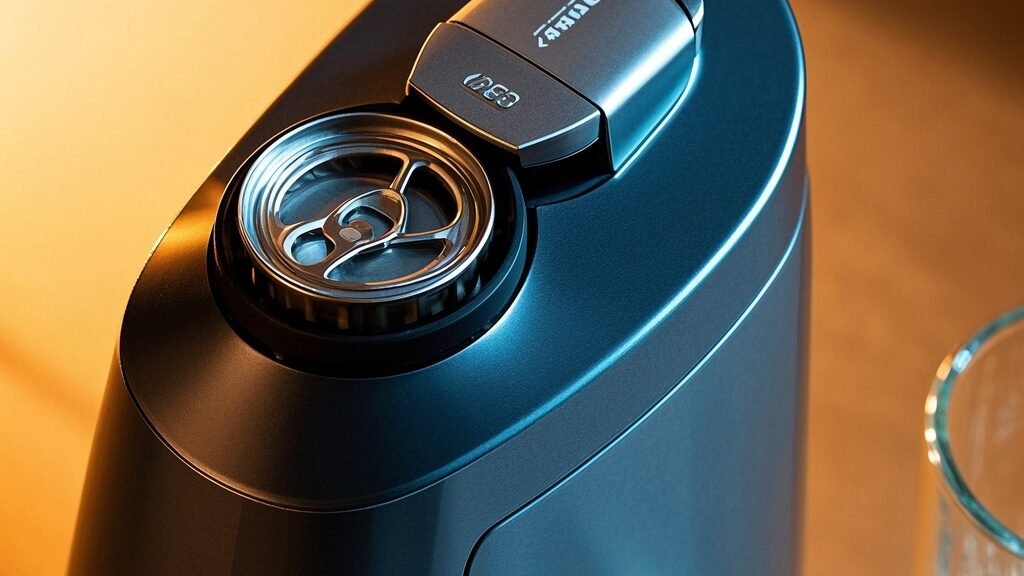
For sheer ease of use, electric can openers are consistently the top recommendation for elderly individuals. Their primary advantage is the complete removal of manual force. The user simply places the opener’s cutting mechanism under the can’s rim, aligns it (often with magnetic guides that hold the can in place), and presses a button. The motor does all the work, cleanly cutting the lid around the perimeter. Most models then automatically lift the lid away, eliminating contact with a potentially sharp edge. This one-touch operation is a game-changer. It requires minimal grip strength, no twisting motion, and almost no pressure. Many electric models also feature large, easy-to-press buttons and stable, non-slip bases. The main considerations here are counter space, as they are appliance-style units, and ensuring the model has a clear, simple interface without confusing extra functions.
A Strong Manual Alternative: Side-Swing or “Smooth-Edge” Openers
If countertop space is limited or there’s a preference for a manual tool, the best choice is a side-swing or “smooth-edge” can opener. This type works completely differently from traditional models. It pierces the can’s side and rolls the lid off from below the rim, leaving a perfectly smooth edge on both the lid and the can. This is a major safety benefit. More importantly for ease of use, the operating mechanism uses a large, ergonomic turning knob that utilizes a gear system. This design provides significant mechanical advantage, meaning it requires far less hand strength to turn than a standard opener. The motion is also a simple, forward cranking motion rather than an awkward wrist-twist. Users can often turn the knob with their palm or the heel of their hand, which is much easier for arthritic fingers. While it still requires some manual operation, it dramatically reduces the effort involved.
Key Features to Prioritize for Safety and Ease
Beyond the type, specific features make a can opener genuinely senior-friendly. Look for Large, Ergonomic Handles. Whether on a manual or electric model, handles should be easy to grip, with soft, non-slip rubberized coatings. For electric models, Automatic Lid Lift & Magnetic Hold are almost essential for safety and convenience, keeping hands away from the cut lid. Stability is Non-Negotiable. The opener must stay firmly planted during use; a heavy base or strong suction feet are excellent features. Finally, Simple, Intuitive Controls are a must. Avoid openers cluttered with multiple buttons or functions. The best tool for an elderly person has one obvious way to operate it. In our assessment, models that combine these features with the fundamental advantages of electric or side-swing mechanisms deliver the highest level of independent, frustration-free use.
Choosing the right kitchen tool can quietly but profoundly support dignity and autonomy in later years. The goal is to remove barriers, not to adapt to them with discomfort. By prioritizing powered operation or superior mechanical leverage, you effectively give the gift of effortless access to countless meals and recipes.
Who Should Consider an Electric or Side-Swing Can Opener?
This decision is straightforward. If you or a loved one experiences any regular difficulty with hand strength, arthritis pain, tremors, or simply finds traditional can openers tiring and cumbersome, it is time to upgrade. The modest investment in a thoughtfully designed opener pays daily dividends in safety, confidence, and preserved energy. It’s a small change with a big impact on everyday life.
Find the perfect can opener for your needs below!
Related Guides:
- Best Rated Can Openers 2026 (All Categories)
- Best Can Opener for Seniors with Weak Grip (2026 Top Picks)
- Best Can Opener for Arthritis Patients (2026 Pain-Free Picks)
- Best Can Opener for Stroke Survivors (2026 Easy-Use Picks)
- Best Electric Can Opener (2026 Top-Rated Automatic Models)
- Best Hands-Free Can Opener (2026 No-Grip Effort Models)
- Best Manual Can Opener (2026 Ergonomic Low-Effort Models)
- Best Sharp-Edge-Free Can Opener (2026 Safe No-Cut Models)