Which can opener requires minimal strength for nursing home residents?
Imagine the simple act of opening a can of soup becoming a daily battle. For many nursing home residents, age-related conditions like arthritis, diminished grip strength, or recovering from surgery transform this basic kitchen task into a source of frustration and even risk. The familiar struggle with a manual opener—the slipping, the pinching, the sharp edges left behind—is more than an inconvenience; it’s a barrier to independence. This common challenge underscores a critical need for kitchen tools that prioritize accessibility and safety above all else. The quest for a solution leads directly to a key question: which can opener requires minimal strength for nursing home residents? The clear answer lies in modern, user-centric designs that eliminate physical strain.
The Superior Choice: Automatic Electric Can Openers
For maximizing ease of use, automatic electric can openers are overwhelmingly the best option. These devices are engineered to remove virtually all physical effort from the process. Operation is typically a simple one-touch affair; placing the opener on a can and pressing a button activates a motor that does all the work. This hands-free operation is invaluable for individuals with arthritis, hand weakness, or limited dexterity, as it requires no gripping, twisting, or sustained pressure.
A significant safety feature of many modern electric models is their smooth-edge design. Instead of cutting through the top lid and leaving a hazardous sharp rim, they magnetically lift the lid after cutting around the outer side of the can. This results in a completely smooth rim, drastically reducing the risk of cuts. Furthermore, their cordless and rechargeable designs enhance safety by eliminating trip hazards from cords and provide the flexibility to be used anywhere, from a bedside table to a common dining area. According to manufacturer specifications and user reports, these openers are generally lightweight, compact for storage, and can accommodate a wide range of standard can sizes.
Considerations for Manual Alternatives
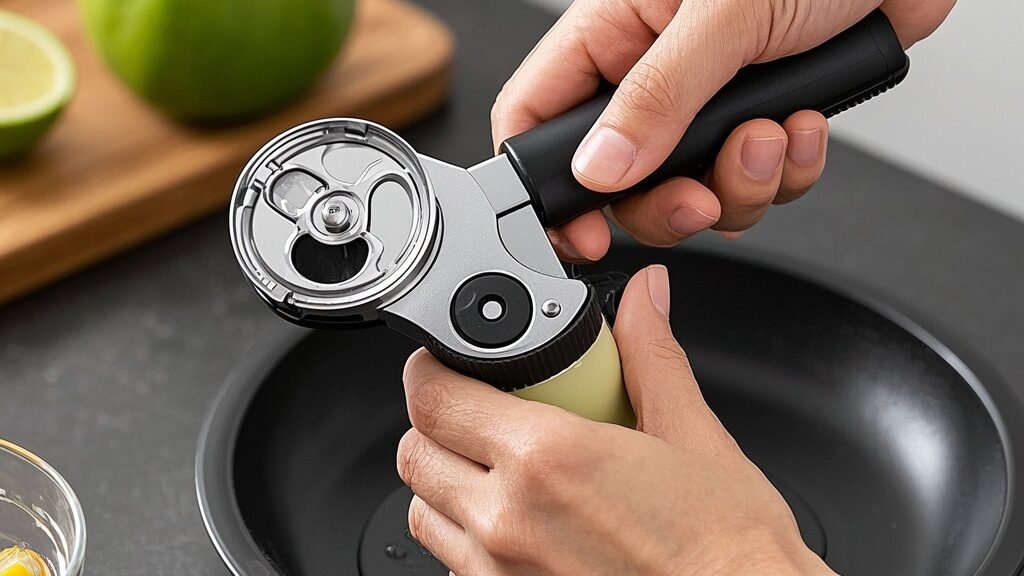
While electric models offer the highest degree of assistance, improved manual can openers can still be a viable option for some residents who prefer a non-electric tool or have minimal residual hand strength. The latest designs focus heavily on ergonomics. Key features to look for include oversized, easy-grip turning knobs that leverage gears to reduce the force needed, and large, contoured, non-slip handles that distribute pressure and minimize strain on joints.
These manual openers often utilize sharp, precision blades that cut cleanly with less revolutions, further reducing effort. They can be a practical, low-maintenance choice and are often quite affordable. However, it’s important to acknowledge that they still require a moderate degree of grip and rotational force in the wrist and hand, which may be prohibitive for those with significant arthritis or weakness. They also usually leave a traditional, potentially sharp lid edge that requires careful handling.
Key Features That Make a Real Difference
When evaluating specific models, several features stand out as particularly beneficial for a nursing home environment. One-Touch Operation and Safety is paramount; the ideal opener should have an intuitive, automatic function that starts and stops with a single action, and it must consistently create smooth, safe edges on the can. Battery life is also crucial for cordless models to ensure reliability and avoid frequent recharging hassles.
Versatility and Ease of Maintenance are equally important. A good opener should handle most common can diameters (typically from about 1 inch to over 3.5 inches) and be easy to clean, often with detachable, washable cutting heads. For facilities, durability and ease of sanitation are key considerations. While most models work on standard metal cans, it is generally advised not to use them on tapered, irregularly shaped cans, or plastic lids.
Who Should Consider an Automatic Electric Can Opener?
For nursing home residents, their families, and facility procurement staff, the decision is clear. An automatic electric can opener with a smooth-edge design is the most appropriate and dignified tool for anyone facing challenges with hand strength, arthritis, or fine motor skills. It directly addresses the core need for minimal physical exertion while significantly enhancing safety. By restoring the simple ability to open a can independently, it supports autonomy and improves daily quality of life.
Find the perfect can opener for your needs below!
Related Guides:
- Best Rated Can Openers 2026 (All Categories)
- Best Can Opener for Seniors with Weak Grip (2026 Top Picks)
- Best Can Opener for Arthritis Patients (2026 Pain-Free Picks)
- Best Can Opener for Stroke Survivors (2026 Easy-Use Picks)
- Best Electric Can Opener (2026 Top-Rated Automatic Models)
- Best Hands-Free Can Opener (2026 No-Grip Effort Models)
- Best Manual Can Opener (2026 Ergonomic Low-Effort Models)
- Best Sharp-Edge-Free Can Opener (2026 Safe No-Cut Models)