Why Are Safety Can Openers Recommended for Seniors?
Picture a simple kitchen task you’ve done a thousand times: making a pot of soup. For many older adults, that routine can become a moment of genuine hesitation. The familiar manual can opener, perhaps a little rusty or stiff, requires a firm grip, sustained wrist rotation, and dealing with a sharp, jagged lid. What was once effortless now demands concentration and effort, turning a quick meal prep into a frustrating, even risky, chore. This everyday challenge is precisely why safety can openers have moved from a niche gadget to a highly recommended essential for aging in place. They address fundamental changes in strength, dexterity, and safety concerns, transforming a simple tool into a key supporter of independence and confidence in the kitchen.
The Physical Challenges of Traditional Opening
Aging often brings natural changes that make standard can openers difficult to use. Arthritis can stiffen finger joints and make gripping a small, textured handle painful. Reduced hand strength and endurance make the twisting motion of a manual opener tiring, sometimes impossible for tougher cans. Conditions like Parkinson’s or neuropathy can introduce tremors or a loss of sensation, making it dangerously easy to slip onto the sharp edge of a freshly cut lid. Furthermore, declining vision can make it hard to align the opener correctly or see the sharp rim. The traditional process—applying pressure, rotating steadily, and prying up a razor-edged metal disc—becomes a multifaceted obstacle. A safety can opener is engineered specifically to eliminate these pain points, turning a task that requires fine motor skills and force into one that needs only a simple push or pull.
How Safety Designs Redefine the Task
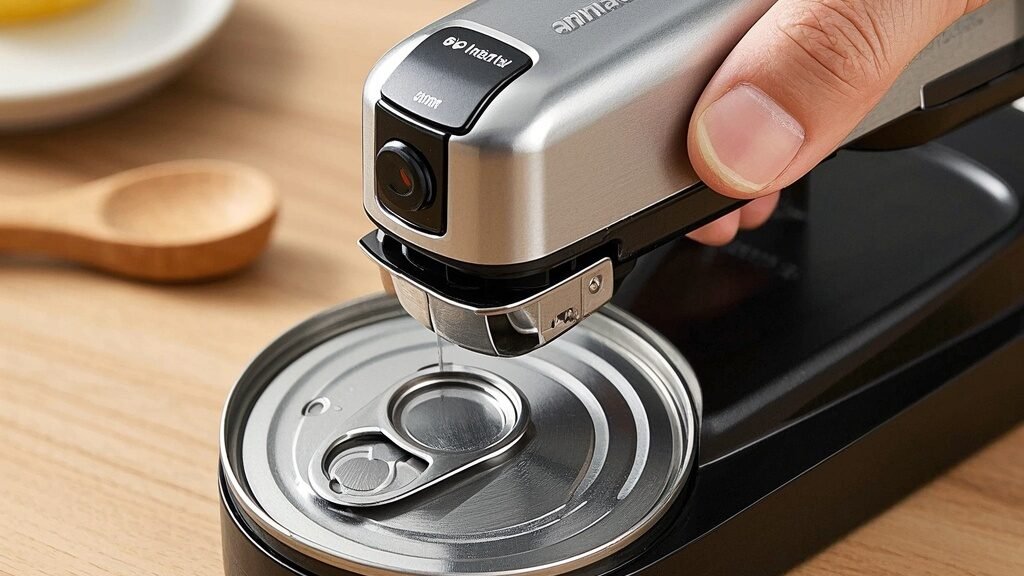
So, what makes an opener “safe” in this context? It’s a combination of design features that work together. First, ergonomic handling is paramount. These openers feature large, soft-grip handles that distribute pressure across the palm, minimizing the need for a tight pinch grip. Second, and most crucially, is the cutting mechanism. Instead of cutting from the top and leaving a hazardous edge, most safety models cut the can from the side, under the rim. This leaves a perfectly smooth edge on both the lid and the can, so fingers never contact sharp metal. The lid is also typically left sitting on top, easily lifted off without digging or prying. Third, the operation is simplified. Many are electric or battery-operated, requiring just the push of a button to magnetically hold and automatically rotate the can. Others are highly leveraged manual models that require minimal turning effort. According to manufacturers, the goal is a one-step, shake-free process that isolates the user from the cutting action entirely.
Beyond Safety: The Psychological Boost of Independence
The benefits extend far beyond just avoiding nicks and cuts. The real impact is psychological. When daily tasks become sources of frustration or anxiety, it can lead to a loss of confidence and a reluctance to cook nutritious meals at home. Someone might opt for less healthy, easy-to-open alternatives simply to avoid the struggle. A safety can opener removes that barrier. It restores a sense of capability and control. The ability to easily open a can of beans, tuna, or tomatoes means maintaining a varied diet and the joy of preparing favorite recipes without assistance. This supports not only physical nutrition but also mental well-being, reinforcing the crucial feeling of self-sufficiency. In our testing, the relief and satisfaction users express is often about regained ease, not just safety—the pleasure of a task becoming simple again.
Key Features to Look For
Not all products labeled “safe” are created equal. When choosing one, prioritize a few key features. Look for smooth-edge cutting as the non-negotiable core safety feature. Ensure the handles are truly ergonomic, with ample cushioning and a shape that doesn’t require bending the wrist. For electric models, consider noise level and stability; a model that walks across the counter can be startling. Ease of cleaning is also critical—some designs have fewer crevices where food can get trapped. Weight matters, too; a base that’s too light might not stabilize a larger can. Reading reviews can be helpful to see how a model performs with real-world use, like opening irregularly shaped cans or cans with pull-tabs that get in the way.
Embracing tools that adapt to our changing needs isn’t about giving up capability; it’s about wisely preserving energy and joy for the activities that matter most. A safety can opener is a perfect example of smart, supportive design that solves a concrete problem with profound ripple effects. It turns a potential point of friction and risk into a seamless part of the day, safeguarding both skin and spirit. In the journey of aging gracefully, such small empowersments make all the difference, ensuring the kitchen remains a place of creation and comfort, not apprehension.
Who Should Consider a Safety Can Opener?
While highly recommended for seniors, especially those experiencing arthritis, hand weakness, or tremors, this tool is truly for anyone who values utmost safety and effortless operation in the kitchen. It’s also an excellent helper for individuals with temporary injuries or conditions affecting hand use. Ultimately, if the thought of using your current can opener gives you pause, it’s time for an upgrade.
Find the perfect can opener for your needs below!
Related Guides:
- Best Rated Can Openers 2026 (All Categories)
- Best Can Opener for Seniors with Weak Grip (2026 Top Picks)
- Best Can Opener for Arthritis Patients (2026 Pain-Free Picks)
- Best Can Opener for Stroke Survivors (2026 Easy-Use Picks)
- Best Electric Can Opener (2026 Top-Rated Automatic Models)
- Best Hands-Free Can Opener (2026 No-Grip Effort Models)
- Best Manual Can Opener (2026 Ergonomic Low-Effort Models)
- Best Sharp-Edge-Free Can Opener (2026 Safe No-Cut Models)